
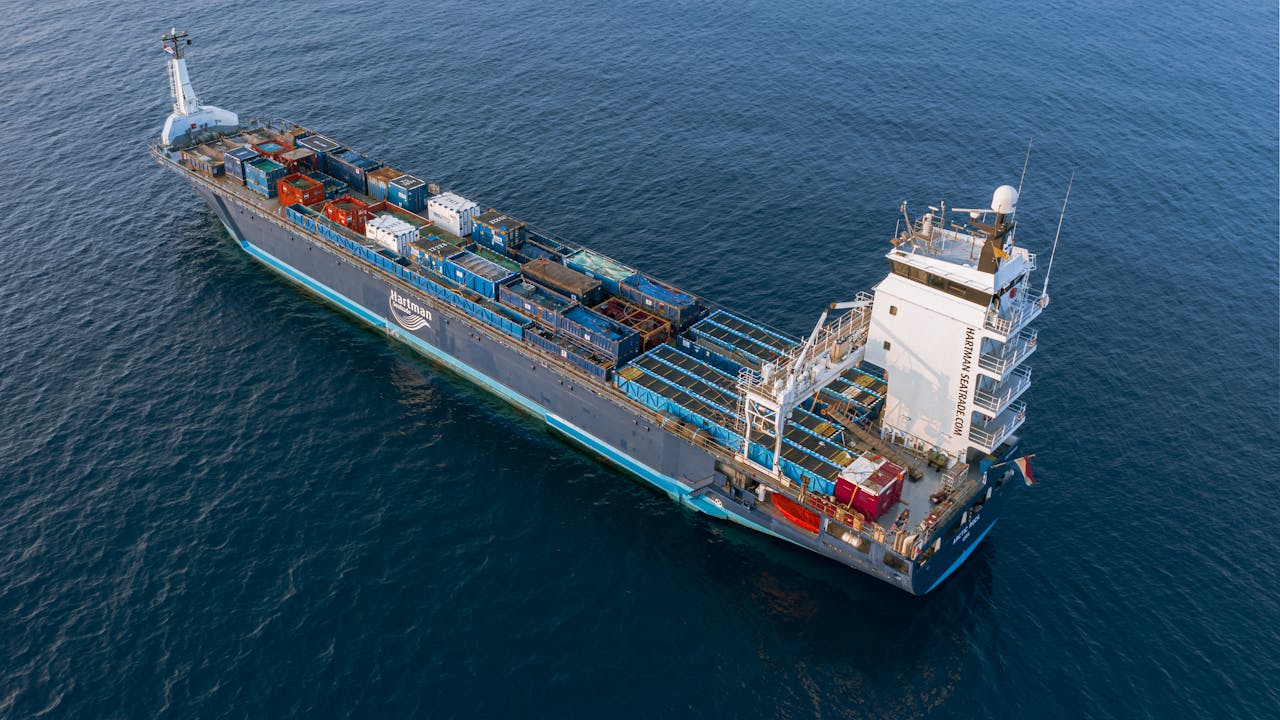
Fuel is the single biggest operating cost for a Singapore OSV fleet — typically 40-55% of daily opex per vessel. And most fleets today rely on manual fuel-log entries by the engineer, cross-checked against bunker delivery notes at the end of each voyage. That process leaks money. Maritime IoT fuel monitoring — automated flow-meter reading, real-time consumption tracking, per-engine granularity — pays back in months. This post covers the actual ROI math for a Singapore OSV operator.
What a maritime IoT fuel monitoring stack looks like
The typical setup on a modern Singapore OSV:
- Flow meters installed on main and auxiliary engine supply and return lines — measure fuel actually consumed by each engine per hour
- Tank level sensors reading each bunker tank at 5-minute intervals
- Data logger onboard aggregating readings + storing locally
- Iridium SBD or Inmarsat IDP satellite modem sending compressed telemetry to shore every 15-60 minutes
- Cloud portal ashore with per-vessel dashboards, alerts, and monthly reports
What it costs to install per vessel
| Item | Cost (SGD) |
|---|---|
| Flow meters (2-4 engines) | 3,000-5,000 |
| Tank level sensors (3-6 tanks) | 1,500-3,000 |
| Data logger + wiring | 800-1,200 |
| Iridium SBD or Inmarsat IDP modem | 900-1,300 |
| Install labour | 1,200-1,800 |
| Software / cloud portal setup | 400-800 |
| One-off per vessel | 7,800-13,100 |
| Monthly airtime (SBD/IDP) | 25-40 |
| Cloud portal subscription | 15-30 per vessel |
Where the savings actually come from
Real numbers we see on Singapore OSV fleets after IoT fuel monitoring is deployed:
- Bunker fraud detection — automated cross-check of bunker delivery vs actual tank fill catches quantity shortfalls. Industry data suggests 3-8% of bunker deliveries are short. On a vessel bunkering 300MT/month at USD 650/MT, a 5% shortfall = SGD 15,000/month recovered.
- Fuel consumption transparency — real-time per-engine consumption identifies inefficient operation (running two engines when one would do, engine load imbalance, injector wear). Typical saving: 3-8% of monthly fuel.
- Voyage optimisation — data lets ops right-size vessel selection for a given job. Sometimes the smaller vessel does the job with 20% less fuel.
- Regulatory reporting — auto-populated CII / EU MRV reports save 4-8 crew hours per voyage.
Want a practical view of what your fleet really needs?
Share your fleet size and the problem you are trying to solve. We will suggest a sensible starting point, not a shopping list.
Payback math for a Singapore OSV fleet
Assume a 6-vessel OSV fleet, average consumption 8MT/day per vessel at SGD 850/MT delivered:
- Daily fleet fuel spend: 6 × 8 × 850 = SGD 40,800/day
- Monthly (25 op days): SGD 1.02 million
- 3% saving from IoT monitoring: SGD 30,600/month
- Deployment cost: 6 × 10,000 = SGD 60,000 one-off + 6 × 55 = SGD 330/month
- Payback: 2 months
- Annual saving after payback: SGD 360,000+
Common objections and how to answer them
“Our engineers already log fuel manually.” Manual logs are systematically wrong — off by 5-15% based on studies. Automated IoT is the only way to know real numbers.
“Our vessels don’t have space for extra hardware.” Modern flow meters are compact — fit inline on existing fuel lines. Data logger is DIN-rail mounted, typically fits in the engine control room panel.
“Iridium SBD is expensive per byte.” Yes, but SBD messages are tiny — 300 bytes per report. Monthly airtime cost is SGD 25-40, negligible against fuel savings.
Related reading
Get a fleet ROI proposal
Send us your fleet size, typical daily fuel consumption per vessel, and we will produce a per-vessel and fleet-wide ROI model with SGD payback period. Sales at Envisiondata Pte Ltd — sales@envisiondatasg.com — or WhatsApp Steve directly on +65 9088 4899.
How we can help
Fleet technology only pays back when it is sized to the job and set up properly. We help operators pick the right systems, install them and keep them working.
- Free fleet systems assessment
- Onboard network, Wi-Fi and cybersecurity design
- Fuel monitoring and fleet IoT with shore dashboards
- Pilot projects on one to five vessels before full roll-out
What happens when you contact us
- Short call or meeting — we listen to how your vessels operate.
- Vessel and route review — we check equipment, space, power, contracts and licensing.
- Clear recommendation — a written proposal and SGD quote, with options.
- Install and support — commissioning, testing and ongoing support.
Related: Fleet Manager bundle
Book a free fleet systems assessment
There is no obligation. If your current set-up is already the right one, we will tell you.
About the author
Steve leads Envisiondata Pte Ltd in Singapore. He has more than 20 years in cables, telecom infrastructure and satellite communications across ASEAN. He designs and supports connectivity for tugs, OSVs, harbour craft and commercial fleets across the region.

Written by Steve
Steve has over 20 years of experience in cables, telecom infrastructure and satellite communications across ASEAN. He founded Envision Data to help Singapore and SE Asia vessel operators choose and run the right maritime connectivity, from Starlink and OneWeb to Iridium, Inmarsat and GMDSS.
Leave a Reply